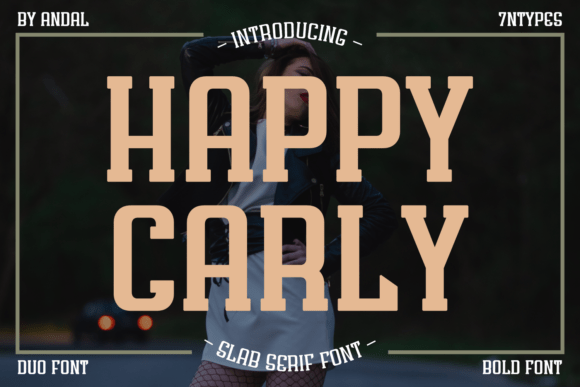
Happy Carly: A Font That Packs Retro Charm with Modern Confidence
If you're looking for a font that can instantly grab attention and add personality to your designs, Happy Carly might just be the perfect choice. This bold slab serif font duo is more than just another typeface—it's a design statement. With its strong serifs and solid letterforms, Happy Carly blends the nostalgic feel of vintage typography with the clean, confident edge of modern design. It’s the kind of font that doesn’t just look good; it works hard in real-world applications.
What Makes Happy Carly Stand Out?
Slab serif fonts are known for their sturdy, block-like features and thick strokes. They have a long history in print media, especially in headlines and posters from the early 20th century. What sets Happy Carly apart is how it takes those classic elements and gives them a fresh twist. The result? A font that feels both timeless and on-trend.
The duo format of Happy Carly includes two variations—usually a regular and a bold or italic style—which allows for more flexibility when designing layouts. You can pair the two versions for contrast in titles and subtitles, making your content more dynamic without needing to switch to entirely different fonts.
When and Where to Use Happy Carly
Happiness Carly isn't just for designers who want to make an impression. It has practical uses across many different industries and personal projects. Let’s take a closer look at some of the most effective places where this font shines:
Vintage Posters and Print Media
Imagine you're putting together a promotional poster for a local music festival with a retro vibe. The event is inspired by the golden age of jazz or classic rock, and you want the visual style to reflect that. Using Happy Carly adds that old-school charm without feeling outdated. Its boldness ensures your main title stands out, while the slab serifs give it a sense of craftsmanship and authenticity.
Product Packaging and Branding
For small business owners launching a new product line—especially in niches like craft beer, artisanal foods, or handmade goods—Happy Carly can help build brand identity. Think about a label for a boutique coffee blend. You want something that looks premium but also approachable. The font’s weight and structure suggest quality, while the subtle character brings warmth and a human touch. This makes it easier for customers to connect with the brand on an emotional level.
Digital Marketing and Web Design
Online marketers often rely on eye-catching headlines to draw users into blog posts, landing pages, or social media campaigns. Happy Carly is excellent for this because it holds up well in digital formats. Whether you're designing a call-to-action button for a website or creating a banner ad for Instagram, this font ensures your message is seen clearly and remembered longer. Its high contrast and readability mean it won’t get lost in the clutter of online content.
Bloggers and Content Creators
Bloggers who focus on lifestyle, fashion, or even niche hobbies like woodworking or vintage car restoration can use Happy Carly to reinforce their brand’s aesthetic. For example, if you run a blog called “Retro Revival” and you’re writing about mid-century design trends, using Happy Carly in your headers and featured images immediately aligns with the theme. It helps set the tone before readers even start reading.
Event Invitations and Tickets
Weddings, birthdays, art shows—you name it. Event planners and hosts can leverage Happy Carly to create invitations and tickets that feel both stylish and memorable. The font’s strength makes it ideal for printing on paper or displaying digitally. A wedding invitation styled with Happy Carly could evoke a Western ranch theme, giving guests a clear idea of the vibe without needing extra graphics or text.
Real-World Examples of Happy Carly in Action
Let’s say you’re a freelance graphic designer working on a client project for a record store opening. The client wants the branding to feel authentic and rooted in the past. Here’s how you might use Happy Carly:
- Store Signage: Use the bold version of Happy Carly for the storefront sign to catch the eye of passersby and convey confidence.
- Album Covers: If the store plans to sell custom vinyl, the font can be used sparingly on labels or packaging to add a unique flair.
- Social Media Posts: Create teaser posts with the font as the headline to maintain consistency across all platforms.
Another example: you're an educator preparing a presentation for a history class focused on the 1950s. Incorporating Happy Carly into your slide headers and visuals gives students a tangible connection to the era through typography. It becomes part of the learning experience rather than just decoration.
Why Choose Happy Carly Over Other Fonts?
There are thousands of fonts available today, so why settle on Happy Carly? Here are a few reasons that might convince you:
- Strong Visual Identity: In a world full of minimalist sans-serif fonts, Happy Carly stands out. It brings character to your work, which is essential for branding or any project aiming to leave a lasting impression.
- Versatility: While it’s great for vintage-style work, it’s also surprisingly adaptable. Pair it with a clean sans-serif body font to balance bold headings with readable content.
- Consistency Across Platforms: The font works well in both print and digital environments, ensuring your branding remains cohesive no matter where it appears.
One thing to note is that Happy Carly isn’t a one-size-fits-all solution. It’s best suited for contexts where you want to emphasize impact and personality. If your design needs to be ultra-minimalist or formal, you may need to explore other options. But if you're going for something with attitude and presence, Happy Carly fits right in.
How Different Users Can Benefit from Happy Carly
Each user will find value in Happy Carly based on their specific needs and goals. Here’s how various professionals and hobbyists can use it effectively:
Entrepreneurs and Small Business Owners
For startups or small businesses wanting to carve out a distinct brand image, Happy Carly can serve as a foundational element. A logo using this font could communicate a sense of heritage and reliability, which is especially useful in industries like food, crafts, or entertainment.
Marketers and Advertisers
Marketing teams often need to create urgency and excitement around a product or campaign. The font’s bold nature is perfect for headlines that demand attention. Try it in email marketing subject lines, or as the primary text in video thumbnails to increase click-through rates.
Freelancers and Creatives
Graphic designers, illustrators, and content creators can include Happy Carly in their portfolio pieces to showcase their ability to work with distinctive typography. It’s also a great font to recommend to clients who are looking for something memorable but not too trendy.
Bloggers and Publishers
Content publishers aiming for a particular editorial style—think travel blogs, vintage fashion sites, or storytelling platforms—can use Happy Carly to frame articles or highlight key sections. It gives the site a curated look that feels intentional and expressive.
Educators and Presenters
In presentations, especially those with a historical or thematic angle, Happy Carly can help set the scene. When teaching about typographic evolution or design movements, using this font in examples or slides makes the lesson more engaging and visually relevant.
Things to Consider Before Choosing Happy Carly
Before you hit "download," there are a few things to keep in mind to ensure Happy Carly is the right fit for your project:
- Readability: While it’s great for headlines, avoid using it in large blocks of text. The thick serifs and condensed spacing aren’t designed for long paragraphs.
- Color Contrast: Make sure the background color complements the font. Darker shades usually work best to highlight the boldness of the letters.
- Use in Combination: Don’t be afraid to mix it with other fonts. Pairing it with a lighter, more legible typeface can help maintain hierarchy and balance in your layout.
- Licensing: Check the font’s licensing agreement before using it commercially. Some free fonts come with restrictions, especially regarding resale or embedding in apps.
Also, consider the audience. Will they appreciate the retro-modern aesthetic, or does it clash with their expectations? Testing the font in different sizes and mediums—like mobile screens or printed flyers—can help you determine if it performs well under various conditions.
Final Thoughts on Making the Most of Happy Carly
Happiness Carly isn’t just about looking good—it’s about making a statement. Whether you're designing a logo for a new venture, crafting a vintage-style flyer, or building a brand with soul, this font has the potential to elevate your work. It bridges the gap between nostalgia and contemporary design, offering a versatile tool for anyone who values impact in their visuals.
Still unsure if it’s right for you? Try it out in a mock-up or test it against your current font choices. Sometimes, the best way to see if a font clicks is to actually use it. And if it does? You might just find yourself reaching for Happy Carly again and again—for good reason.